This article may contain affiliate links. If you purchase through these links, I may earn a small commission at no extra cost to you.
SHOGUN 将軍 is a rare kind of historical drama—one that feels both cinematic and culturally grounded.
As a Japanese viewer, what stood out to me most was how carefully the series handles not just the visuals, but the deeper values behind them.
One example of this attention to detail can be seen in the visual composition of the series, where silence, space, and character positioning reflect traditional Japanese aesthetics.
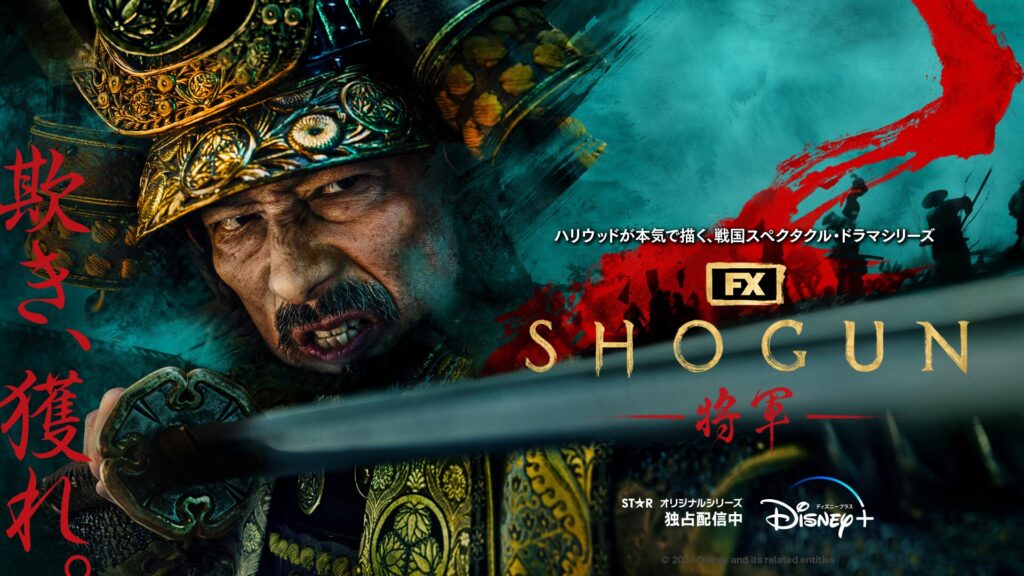
Source: Disney+ official website
https://disneyplus.disney.co.jp/program/shogun
A Level of Authenticity You Don’t Usually See
One of the biggest reasons this show feels authentic is the strong involvement of Japanese talent, both on screen and behind the scenes.
In particular, 真田広之 (Hiroyuki Sanada) serves not only as the lead actor but also as a producer. That dual role clearly shows in the final result.
Because of this, the series avoids the subtle “off” feeling that often appears in Western portrayals of Japan.
The gestures, the pacing, and even the silence between lines feel natural rather than exaggerated.
Loyalty and Bushido: A Key Cultural Theme
One thing that may surprise international viewers is the deep sense of loyalty shown by the characters.
As seen through Anjin’s perspective, people in this world appear to follow their lord with absolute obedience.
This idea is rooted in Bushido (武士道 / Bushidō), a traditional Japanese code of ethics followed by samurai.
Bushido emphasizes values such as:
- loyalty to one’s lord
- honor and reputation
- self-discipline and sacrifice
However, it’s important to understand that this system is not the same as absolute monarchy or slavery.
Yes, some people may have followed orders out of obligation or pressure.
But at the same time, many genuinely believed in these values and took pride in their loyalty.
This internal sense of honor is what makes the culture so unique—and sometimes difficult to fully grasp from a modern or Western perspective.
A Story Connected to Real Japanese History
Another reason the series resonates strongly with Japanese viewers is its connection to real historical figures and events.
While the story is not a direct retelling, many characters are inspired by real people from Japanese history.
For example, the character Toda Mariko is widely believed to be based on
細川ガラシャ (Hosokawa Gracia).
Before her marriage, she was known as Akechi Tama (Akechi Tama), the daughter of
明智光秀 (Akechi Mitsuhide).
Akechi Mitsuhide famously betrayed
織田信長 (Oda Nobunaga) in the Honno-ji Incident (Honnō-ji no Hen), leading to Nobunaga’s death.
Soon after, Mitsuhide was defeated by
豊臣秀吉 (Toyotomi Hideyoshi), one of Nobunaga’s former retainers.
Because of this, his family came to be seen as traitors.
Knowing this background adds a whole new layer of meaning to Mariko’s character and her decisions throughout the story.
Hollywood Scale Meets Japanese Storytelling
Another standout aspect of SHOGUN is its scale.
Compared to traditional Japanese period dramas, the production feels much larger in every way—
from the sets and costumes to the cinematography and overall atmosphere.
This is where Hollywood’s strengths really shine.
Years of experience and technical development allow for a level of visual depth that’s hard to achieve otherwise.
What makes SHOGUN special is how that high-level production blends seamlessly with the structure of a Japanese historical drama.
The result is something that feels both familiar and completely new.
Final Thoughts
SHOGUN is more than just a historical drama.
It’s a thoughtful interpretation of Japanese culture, told through a global lens.
You can absolutely enjoy it without any background knowledge.
But if you take the time to explore the real history behind it, the experience becomes much richer.
If you found the series interesting, I highly recommend learning more about the historical figures that inspired it—and then watching it again.
You’ll notice details you completely missed the first time.
If you’d like to dive deeper into the history behind the series, feel free to check out the related articles on this site.

コメント