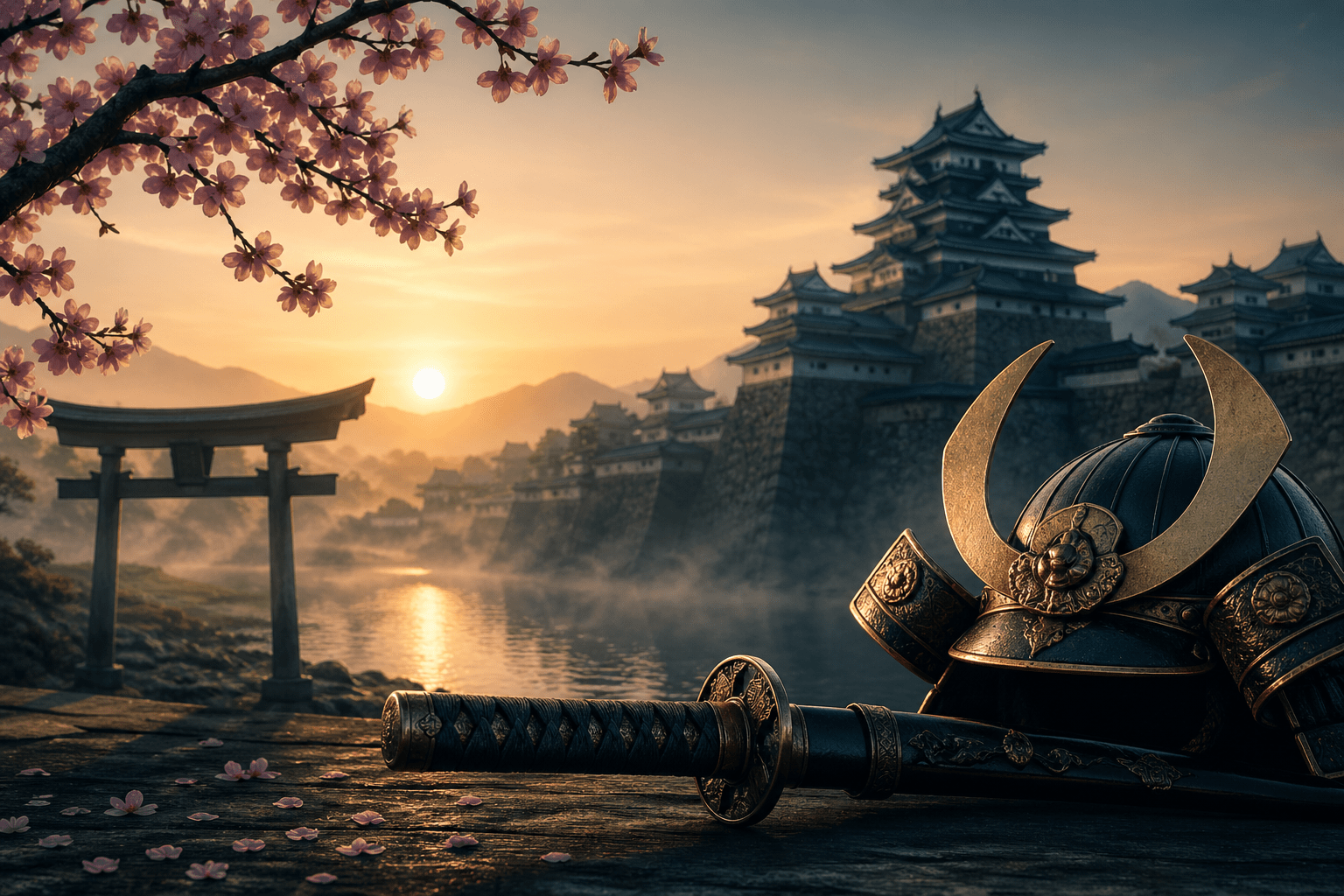
A Clear Explanation for SHOGUN Viewers
Disclosure: This article contains affiliate links. If you purchase through these links, I may earn a small commission at no extra cost to you.
If you are watching SHOGUN, you have likely encountered the term “Shogun” many times.
However, its meaning is not always immediately clear, especially for those unfamiliar with Japanese history.
This article explains what a Shogun is, how the role developed, and why it is central to understanding the story.
What Is a Shogun?
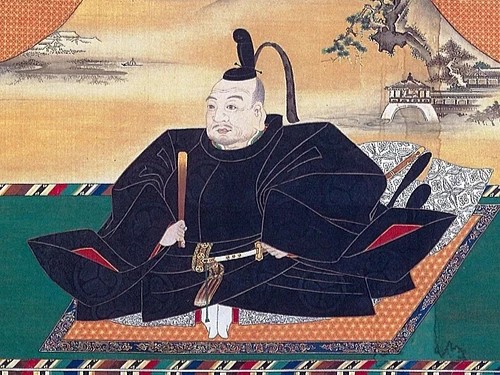
Tokugawa Ieyasu depicted as “Tōshō Daigongen,” painted by Kanō Tan’yū.
Source: Wikimedia Commons, Public Domain.
A Shogun was the military ruler of Japan who held real political power.
Although Japan had an Emperor, the Emperor did not govern the country in practice.
Political authority and military control were exercised by the Shogun.
In simple terms, the Emperor represented the nation, while the Shogun ruled it.
The Origin of the Title
The full title is Sei-i Taishogun (征夷大将軍).
Originally, this referred to a general appointed to lead military campaigns.
Over time, the position evolved beyond a temporary military role and became the highest authority in government.
As a result, the Shogun came to function as the de facto ruler of Japan.
Shogun and Emperor: A Structural Difference
The distinction between the Emperor and the Shogun is essential.
- The Emperor served as a symbolic and spiritual figure
- The Shogun exercised political and military power
This dual structure can be understood as a separation between representation and governance.
While the Emperor embodied legitimacy and tradition, the Shogun controlled administration and force.
The Source of the Shogun’s Power
During Japan’s feudal period, society was organized around samurai warriors and regional lords known as daimyo.
The Shogun stood at the top of this hierarchy and was responsible for:
- commanding military forces
- regulating powerful regional domains
- directing national policy
Through this system, the Shogun maintained practical control over the country.
Why the Shogun Matters in SHOGUN
In SHOGUN, the struggle for power is closely tied to the position of Shogun.
The central conflict is not merely political rivalry, but a contest over who will ultimately control the country.
Alliances, negotiations, and conflicts in the story revolve around this question.
Understanding the role of the Shogun clarifies the motivations behind these actions.
Summary
- A Shogun was the military ruler who governed Japan
- The Emperor existed but did not exercise political power
- The role developed from a military title into the highest authority
A clear understanding of the Shogun provides essential context for following the narrative of SHOGUN.
FAQ
Is a Shogun the same as a king?
Not exactly. A Shogun held comparable power to a king, but Japan maintained a separate imperial institution.
Was a Shogun a samurai?
Yes. The Shogun was the highest-ranking member of the samurai class.
Who is the most well-known Shogun?
One of the most prominent figures is Tokugawa Ieyasu, who established a long-lasting political system in Japan.

コメント